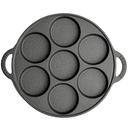
How we picked: four criteria, in this order
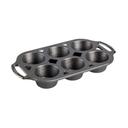
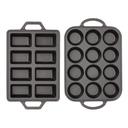
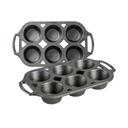
1. Well count against a real recipe. Standard muffin and cupcake recipes are written for twelve. Cast iron pans are made in sixes and sevens, because the mass adds up fast. So the first question is not which pan is best, it is how you intend to resolve that mismatch: one heavy 12-cup pan, two light 6-well pans, or two bakes in one pan. All three are defensible and we have ranked the best version of each.
2. A published well diameter.This is the spec that decides whether your liners fit and whether a recipe’s bake time transfers, and the category almost universally refuses to publish it. One pan here states 8 cm per cup. The rest publish pan dimensions only, so our cards say “Not published” and the prose says why, rather than estimating a well size from a product photo.
3. Weight, loaded, at oven height. A 4.92 lb Lodge pan with six muffins in it is an easy one-handed lift. A 16.3 lb pair of pans is not, and a full twelve-cup iron pan sits somewhere no steel tin ever does. If you have wrist or grip trouble, this criterion should outrank every other one on the page.
4. What the maker will let you do.Lodge marks its muffin pan “oven safe, not recommended for stovetop use”, which is the rule most people break first, because skillet habits transfer. One budget listing claims stovetop, broiler and campfire use for the same shape. We report both statements as made rather than averaging them into a recommendation.
What iron actually buys you in a muffin pan
It buys edges.A hot iron well sets the outside of the batter fast, which is how you get the crisp rim and the browned bottom that a thin steel tin cannot produce. On corn muffins that difference is the entire point — the same reason a wedge pan exists at all, which our cornbread pan roundup works through in detail.
It buys a pan that outlives the kitchen.Cast iron bakeware does not dent, warp or lose a coating, because there is no coating — the seasoning is polymerized oil you can repair at home. Reseasoning a tired muffin pan takes an afternoon and costs nothing, which is not true of a nonstick tin.
What it costs is preheat and weight.Five pounds of iron takes longer to reach temperature than half a pound of steel, so a cast iron muffin pan wants a properly preheated oven and does not want to be opened early. And a second batch goes into a pan that is already hot, which is a genuine advantage for browning and a genuine problem for timing — the second dozen bakes faster than the first. Watch it rather than trusting the clock.
Will paper liners fit, and do you need them?
Standard US liners are cut for a 2.75-inch well. The one pan here that publishes a well size states 8 cm, which is about 3.15 inches — wider, so a liner fits loosely and the muffin spreads slightly flatter. Nobody else publishes anything, so the only honest answer for the Lodge pans is to measure the pan you receive.
In a seasoned iron pan you mostly do not need liners, and you are giving up the crust if you use them: the liner sits between the batter and the hot iron, which is the surface you paid for. Grease the wells properly instead — fat on the sides as well as the bottom, applied to a cold pan — and the muffins release. If a batch does stick, that is a seasoning problem rather than a pan problem, and our sticky cast iron guide covers the usual cause.
About vintage gem pans
Search “cast iron gem pan” and the results are not a shopping list: the live autocomplete tree runs to “identification”, “vintage”, “antique”, “for sale”, “Griswold” and “Waterman”. That is the collector market, not the bakeware aisle, and it is a different purchase with different risks — unmarked pans, pitted wells, cracked webs and prices set by rarity rather than by usefulness. A vintage gem pan can be a wonderful thing to bake in, and it can also be a $90 wall ornament. How to identify vintage cast iron is the page for that hunt, and Griswold vintage cast iron covers the name that comes up most. Everything ranked above is new, in production and buyable today, which is the only kind of recommendation this page makes.
Caring for a muffin pan, which is harder than a skillet
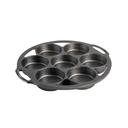
Seven wells have far more surface area and far more awkward corners than a flat pan, and batter burns into the lip between wells. Three things make it easy. Wash it warm and soon, before the sugar sets — a little soap is fine, and cured seasoning does not dissolve in it. Dry it on a warm burner or in the cooling oven, because water sitting in a well is how a muffin pan rusts from the inside out. Then wipe a very thin film of oil over the whole pan, wells included, and store it uncovered. A pan scraper and a chainmail scrubber do more for a muffin pan than for anything else in a cast iron kitchen, simply because of the geometry.
If a muffin pan is not quite the shape you want
For cornbread in wedges, sticks or a round pone, best cast iron cornbread pans ranks that family and explains what each shape does to the crust. For a single loaf rather than portions, best cast iron loaf pans covers the bread pans, with and without lids. And for the pan that does most of this adequately and everything else brilliantly, the ordinary skillet is still the answer: best budget cast iron skillets starts at the price of a muffin pan.