Every published oven limit in our registry, in one place
This is the table we wanted when we started and could not find anywhere. All of it is the maker’s own figure, not ours.
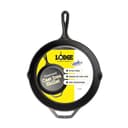
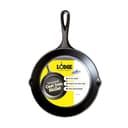
Bare cast iron (Lodge, Victoria, Cuisinel, Field, Stargazer, Lancaster): no published oven maximum.Lodge gives a 500°F figure on some listings for its seasoned pans and no ceiling at all in its care guidance; the honest reading is that the pan is not the binding constraint in a domestic oven. Smithey goes further and answers the question in its FAQ with “your oven can’t get too hot for a Smithey.”
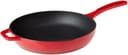
Enameled cast iron: 450–500°F, stated.Lodge publishes 500°F across its Essential Enamel line; Cuisinart publishes 450°F for its enameled fry pan; Staub publishes 500°F with the lid and up to 900°F without it on certain cocottes, and separately rates the knobs on its 4-quart to 464°F — below the body of the pot. Every enameled piece publishes a ceiling and no bare iron does, because only one of them has a coating that can fail.
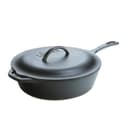
Tempered glass lids: 400°F (Lodge part GL10). This is the number behind every bread recipe that insists on an iron lid, and it is lower than most people assume.
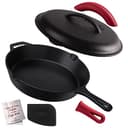
Silicone handle covers: 350°F (Cuisinel’s own care page). The lowest figure in the registry by a wide margin, on a part that ships with the pan and is easy to forget about.
How we picked: four criteria, in this order
1. The rating of the weakest attached part, not the rating of the iron. That is the whole argument of the page and it reordered the list.
2. Will it physically fit, with air around it? A 13-inch pan with a long handle has to go in diagonally in many ovens, and a pan pressed against the back wall roasts unevenly. Measure the rack, not the pan.
3. Can you get it out safely?Weight matters more coming out of an oven at chest height than it does on a hob, and an assist handle or a helper handle is worth more here than anywhere else. A cast iron handle in a 450°F oven is 450°F: use a dry glove, never a damp cloth, because steam goes through fabric instantly.
4. Lid material, if it has a lid. Iron over glass for oven work, on the published numbers above.
The cast iron that is oven-only, and the cast iron that is not oven-ready
Two boundaries worth knowing, both published. Oven-only:Lodge states “oven safe, not recommended for stovetop use” for its 15-inch pizza pan, its 15.5 x 10.5-inch baking pan, its wedge pan and its muffin pan. They are broad, relatively thin castings designed for the even ambient heat of an oven, and a single burner under one patch of them heats them unevenly. Cast iron for baking ranks that family on its own terms.
Not oven-ready:anything with a wooden underliner, a wooden tray or a removable cool-touch handle — the fajita platters, the serving sets — is a table product. The iron plate itself goes under a broiler; the wood does not go in the oven at all.
Three things an oven does to cast iron
It is the gentlest heat source cast iron sees. An oven surrounds the pan, so there is no burner ring to even out and no flame on the outer wall. This is why a cast iron pan roasts beautifully with no technique at all, and why sear-then-roast works so well in one pan: the hob does the part that needs ferocity and the oven does the part that needs patience.
Long dry heat will harden seasoning and long wet heat will soften it. Two hours of covered braising in an acidic liquid is the hardest thing you can do to a young seasoning on bare iron — not a disaster, but the reason we point tomato-heavy braisers at enamel. Why cast iron seasoning flakes covers the mechanism.
A self-cleaning cycle will strip it to bare metal.Some people use that deliberately to restore a rusted pan. Do not do it to an enameled one, do not do it to a pan with any non-iron part, and expect to re-season from scratch afterwards — how to reseason cast iron is the procedure.
If the oven is the main reason you are buying
Then the shape question matters more than the pan question. For bread and braises a pot beats a skillet on lid seal alone — best Dutch ovens for braising and best cast iron pots are those pages. For batter, bakeware beats both. For roasting a chicken a plain skillet is genuinely hard to beat, and the roasting page argues the other side of that. And if you cook on a hob that constrains your choice as well, start at cast iron for induction or cast iron for gas stoves.