How we chose these waffle irons
1. It has to actually be cast iron
This ruled out most of the category, including several of the best-known stovetop waffle irons, which are cast aluminum. The distinction is not pedantry. Iron is roughly three times denser than aluminum and holds far more heat for its volume, which is why waffle three out of an iron plate cooks like waffle one, while a light plate needs time to recover between pours. Aluminum wins on weight and on heating up quickly; iron wins on the thing you bought a heavy pan for.
2. Non-electric, and honest about the fire it wants
A hinged cast iron iron is designed to sit on a heat source and be turned over by hand. Some are built for a campfire or grill, with long steel handles to keep your hands out of the flames; others are built to sit on a burner. They are not interchangeable in practice — a long-handled campfire iron is awkward and unbalanced on a modern flat cooktop, and a stovetop iron over an open fire will cook your knuckles. We say which is which for every pick.
3. Does the rim contain the overflow?
The single most annoying thing about hinged irons is batter escaping the seam and running down the outside, where it burns onto the iron and the burner. A double or non-drip rim catches it. This is the detail that decides whether an iron becomes a Sunday ritual or a once-a-year novelty, and it is worth paying for.
4. Weight you have to flip
Iron’s heat retention is bought with mass, and unlike a skillet you have to pick this mass up and turn it over every few minutes. An eight-pound iron cooks beautifully and is genuinely tiring by the fourth waffle. A lighter seven-inch iron is easier to work with and recovers heat a little slower. Neither is wrong; know which trade you are making.
5. What the listing actually states
Two of the irons here state that they arrive pre-seasoned; two do not, and we have not filled that gap with a guess. Assume any bare cast iron waffle iron will want seasoning attention before its first batch and after every wash — the grid pattern has far more surface area than a flat pan, and it is exactly where an unseasoned iron will grab.
The waffle irons, one by one
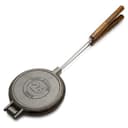
Rome Chuckwagon 1028 — best for campfire and grill
Rome has been making open-fire cast iron since 1964, and the Chuckwagon is the pattern most other hinged irons imitate: two heavy plates on a hinge with long steel handles built for reaching over coals. Over a campfire or on a grill it is the right tool by a wide margin, and it is the pick if waffles are part of camping rather than part of breakfast. The honest cautions are that it is unbalanced and awkward on a flat kitchen cooktop, and that neither the listing nor the maker’s site states a factory seasoning for this model — plan to season it before the first pour, and keep it dry afterwards.
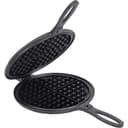
Lehman’s 7-inch — best for the stovetop
The heavy one, and the pick for a kitchen. Eight pounds of hinged cast iron with a non-drip double rim that catches the overflow that makes cheaper irons infuriating, sold by a retailer that specializes in equipment for people cooking without electricity. The mass is the point: it holds enough heat that a run of waffles cooks consistently rather than getting progressively paler. It is also the reason for the main trade-off — you feel eight pounds by the fourth flip — and, like the Rome, the listing does not state whether it ships seasoned. One 7-inch waffle at a time means a family breakfast is a queue.
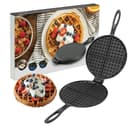
DVK 8-inch — the best value
An unbranded import, and we will not dress it up as anything else: the casting is rougher than the named irons and there is no meaningful warranty behind it. What it is, is real cast iron in the largest plate size here, sold pre-seasoned at well under the price of the heritage names. If you are not sure whether you will use a stovetop waffle iron more than twice, this is the sensible way to find out, and the 8-inch plate makes a properly sized waffle rather than a saucer.
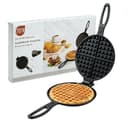
DVK 7-inch — lightest and cheapest
The same import iron one size down, and the cheapest genuine cast iron waffle maker we found in stock. The smaller plate is meaningfully lighter to flip, which sounds trivial until you have turned a hot iron over a burner six times in a row, and it packs more easily for camping or an RV. The cost is capacity: a 7-inch waffle is one serving, so this is a pan for one or two people, not a family.
Cast iron vs cast aluminum vs electric: which should you actually buy?
Here is the fair version, since two-thirds of this category is not cast iron at all.
- An electric waffle maker is the right buy for most households. It is thermostatically controlled, it cooks both sides at once, it does not need seasoning, and it makes consistent waffles with no skill. If your goal is waffles on a school morning, buy one of those and spend the difference on a better skillet.
- A cast aluminum stovetop iron is light, heats quickly and needs less muscle. It is a reasonable middle ground if you want a stovetop iron without the weight, and the honest downside is heat recovery: a light plate cools when cold batter hits it.
- A cast iron ironis for the cook who already likes cast iron, wants a deeply crisp crust, and does not mind managing the heat themselves — or for anyone cooking over a fire, where iron is simply the only sensible material. That is a real but narrow audience, and we would rather say so than pretend everyone needs one.
How to actually use a cast iron waffle iron
The technique is closer to cooking pancakes on a griddle than to operating an appliance. Preheat both plates over medium heat for several minutes with the iron closed, turning it once so both sides come up together — an underheated plate is why the first waffle always sticks. Grease both grids generously, even on a well-seasoned iron, and use a fat that likes high heat rather than butter, which burns in the grid pattern. Pour less batter than you think, because it spreads when you close the lid, then close, cook for a couple of minutes, flip the whole iron over and give the second side a similar time. Steam escaping from the seam is your timer: when it slows noticeably, the waffle is close.
Cleaning is the other half of the deal. Do it while the iron is still warm, with hot water and a stiff brush that can get into the grid; a little dish soap is fine on modern seasoning, as we explain in can you use soap on cast iron. Dry it fully — back over the burner is easiest, because the grid traps water — then wipe the thinnest possible film of oil over both plates. If food starts grabbing in the grooves, the fix is the same as for any pan: rebuild the finish with our seasoning guide.
What about the hinge?
The hinge is the one part of a hinged iron that is not a pan, and it is worth a moment of care. Keep batter out of it where you can, do not soak the iron (water sits in the joint and rusts it from the inside), and give the pivot the same wipe of oil the plates get. A seized or rusted hinge is the most common way one of these irons dies, and it is entirely preventable.