How to choose a cast iron fajita pan
Thermally this is the least demanding cast iron there is: the pan gets hot, food goes on, the pan travels about twelve feet. Which is exactly why the things that matter here are not the things that matter in a skillet.
1. Does the wood underliner come with it?
Start here, because it is the only part of this purchase that can genuinely go wrong. A pan hot enough to sizzle is hot enough to scorch a table, melt a placemat and burn a hand that reaches for it. The wood underliner is not decoration; it is the reason the pan can be set down at all. Lodge’s own description of its bundled set puts it plainly: “Wood underline protects tables and countertops.”
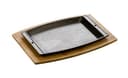
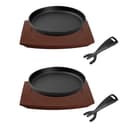
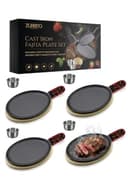
Of the six platters here, three ship with a base and three do not. The Lodge Chef’s Platter Set includes its underliner. The DVK comes with a wooden tray. The ZURRITO four-place set comes with four trays, four handle covers and four saucers. The two single Lodge ovals and the 13-inch Lodge platter come as bare iron, and Lodge’s matching oval underliner (part UOPB) is a separate purchase at a price that, on the day of writing, sat above the pan’s. If you already own a thick wooden board or a trivet you are happy to put a 500°F pan on, buy the bare iron. If you do not, buy the set — it is the same logic that puts a press-and-comal bundle above two cheaper presses on our cast iron tortilla press roundup: the headline object is only half the equipment.
2. Handle, no handle, or removable handle
This decides whether you have bought a pan or a plate, and the three answers are genuinely different products.
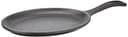
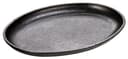
A fixed long handle (Lodge LOS3) means you can preheat it on a burner, cook in it and lift it off with a mitt. It also means the handle is as hot as the pan and sticks out over the table. No handle(Lodge LOSH3, LJ0SH3) means it stacks and stores beautifully and there is no safe way to move it hot without a gripper or the underliner it sits in — Lodge’s own stated reason for the handleless version is to “eliminate storage issues”, which tells you where its priorities are. A removable handle (DVK) is the clever answer: the handle screws on for cooking and comes off for serving, so the pan behaves like a skillet on the hob and a platter at the table.
Whichever you pick, a silicone or fabric handle cover is not optional on a handled pan. The ZURRITO set includes four; Lodge sells its handle holders separately and we cover them on our cast iron accessories page.
3. Published weight, because the sizzle is stored heat
The entire theatre of this category is thermal mass. The food keeps cooking in front of the diner because the iron is still giving heat back, and that is a function of how much iron there is. The published figures here are the most useful numbers in the category, and they spread wider than you would expect across pans of almost the same footprint.
| Platter | Published size | Published weight | Base in the box? |
|---|
| Lodge Oval Fajita Pan (LOS3) | 10 x 7.5 in | 3.56 lb | No |
| Lodge Chef’s Platter Set (LSC3SET) | 13.75 x 9.75 in | 4.5 lb for the 3-piece set | Yes, wood underliner |
| DVK 9-inch | 9 x 5.12 in | Not published | Yes, wooden tray |
| ZURRITO 4-place set | Not published per plate | 7 lb for all four settings | Yes, four trays |
| Lodge Handleless Server (LOSH3) | 10 x 7.5 in | 2.67 lb | No |
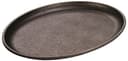
| Lodge Oval Griddle (LJ0SH3) | 13.375 x 10 in | 4.21 lb | No |
Two things fall out of that table. First, Lodge’s handled fajita pan is nearly a pound heavier than its handleless server at the same 10 x 7.5 inches — some of that is the handle itself, but it also means the handled pan carries more stored heat to the table. Second, the two picks whose selling point is the complete package are the two that publish the least: DVK publishes no weight at all, and ZURRITO publishes a carton weight for four settings and no per-plate dimension. In a category sold entirely on heat retention, an unpublished weight is a real gap, not a formality.
4. Size, measured against one plate of food
The category standard is a 10 x 7.5-inch oval, and it is the right size for one generous serving: a fajita portion with its onions and peppers, or a single steak with room to spoon butter over it. Below that, the 9-inch DVK and the plates in the multi-packs are single-portion platters — right for a steakhouse-style place setting, tight for a full fajita mix. Above it, Lodge’s 13.375 x 10-inch oval is a genuine shared platter that will take a sliced flank steak for the table, and at a published 4.21 pounds with no handle it is also the one most likely to need two hands and a serious base.
One sizing trap worth naming: the Lodge fajita pan’s own spec table lists a length of 15.12 inches against a stated cooking size of 10 x 7.5 inches. That larger figure is the handle and packaging, not the cooking surface, and it is the same kind of rim-versus-floor confusion we untangle on our cast iron skillet size guide. Buy on the stated cooking size.
5. Documentation, and who will stand behind it
Lodge is the only brand here that publishes anything verifiable, and even that comes with a caveat worth stating. Its handleless server and 13.375-inch oval listings both say “MADE IN THE USA” and name the South Pittsburg, Tennessee foundry where Lodge has cast iron since 1896. The Chef’s Platter Set says “Made in U.S.A”. The handled fajita pan — the pan most people in this category buy — states no country of manufacture at all, though it does carry a “Lifetime” warranty and the only cooktop list in the category: oven, stove, grill, campfire and “also great with induction cooktops”.
None of these Lodge ovals appears in Lodge’s own consumer catalog. Its serveware collection carries heat-treated mini servers, a mini kettle, commemorative skillets and the care range — and no oval fajita pan, no oval serving griddle and no wood underliner. They are Lodge foodservice parts, which is why they have restaurant-supply part numbers and why no maker page publishes their specifications. Every figure on this page is therefore attributed to the listing it was read from, never to Lodge. The three non-Lodge picks publish no origin at all, and DVK claims a “lifetime warranty” with no terms anywhere and no reachable maker page.
Using one properly
A fajita pan is used harder and for a shorter time than any other cast iron you own, and the technique is almost entirely about heat.
Preheat it empty and dry, longer than feels sensible. The sizzle is the pan giving stored heat to moisture, so a pan that goes to the table at 300°F does nothing. Five to eight minutes over medium-high on a handled pan gets you there; our guide to how long to preheat cast iron explains why the edges lie to you about when it is ready. Handleless servers are easier to preheat in the oven or under a broiler, which is also how restaurants do it.
Cook the food somewhere else, mostly. On a 10 x 7.5-inch oval there is no room to sear and no room to move anything, so the honest workflow is to cook in a proper cast iron skillet for steak or a cast iron grill pan, then transfer onto the screaming-hot platter with a splash of its own juices at the table. That is what produces the noise. The exception is the handled Lodge pan and the removable-handle DVK, which have enough handle to actually cook a single portion in.
Set it on the underliner before you load it, not after. And keep the base dry. Wood plus repeated thermal shock plus spilled fat is how underliners split, which is the single most common failure in this category and the reason restaurant versions are an inch of solid hardwood.
Care is ordinary cast iron care. Hand wash, dry properly, wipe with a thin film of oil — Lodge’s own instruction on the fajita pan is exactly that: “hand wash, dry, rub with cooking oil”. One point specific to these pans: they see fat, acid and citrus in short bursts at very high heat, which strips seasoning faster than everyday cooking does, so expect to re-season a fajita platter more often than a skillet. Our guide to seasoning cast iron covers the oven method, and the ZURRITO set’s own listing already tells you to do it: “pre-seasoned and ready to use — but for optimal performance and longevity, we recommend seasoning again before first use.”
What we left off
Lodge’s wood underliners on their own. They are real, live products (the walnut-stained UOPB fits both 10-inch ovals) and they are the right companion purchase for the bare Lodge pans. We have not ranked them as picks because an underliner is a piece of wood, not cast iron, and there is nothing to compare it on beyond fit. Just know the price before you buy a bare pan: the underliner is the dearer half of that pair.
The bundled Lodge Fajita Set (LFSR3). This is the product most people actually want — oval griddle, red-stained wooden underliner and a chili-pepper handle holder in one box. We could not verify it as live and buyable on the visit date: the retail listings we found were showing sold out or were third-party resales, and it is not in Lodge’s consumer catalog either. The Chef’s Platter Set is the bundled Lodge option we could verify, so that is the one ranked.
Six and eight-plate restaurant sets. Several are live and in stock, and they are good value per setting if you genuinely serve six people this way. They publish even less than the four-place set does — typically a carton weight and nothing else — and there was nothing to rank them on beyond count. If four is not enough, the same sellers list larger counts of the same plates.
Aluminum sizzle platters. Restaurant-supply channels sell a lot of them, and they are lighter and cheaper. They also store a fraction of the heat, which is the only reason this product exists. We ran into the same mislabeling problem in cast iron waffle makers, so the rule is the same: read the material line, and check the weight against the size.
So which one should you buy?
If you want one platter and you already own something safe to set it on: the Lodge Oval Fajita Pan, for the handle, the published weight and the lifetime warranty. If you want one purchase that is finished when it arrives: the Lodge Chef’s Platter Set for American iron on a wooden base, or the DVK if the removable handle appeals more than the origin statement. For a table of four all getting their own plate: the ZURRITO set, by a distance, on price per setting. For the cheapest documented American iron on the page: the Lodge handleless server, accepting that you move it on its base. And for one big sizzling platter the whole table eats from: the 13.375-inch Lodge oval, with two hands.