How we chose these small skillets
A small pan is not simply a big pan scaled down. The things that decide whether you like it are different, and mostly absent from the product photos.
1. Weight, because that is the whole point
The reason to own a small cast iron skillet is that you will pick it up more often. A 6.5-inch Lodge weighs roughly a third of what the 10.25-inch does; an 8-inch lands somewhere in between. Anything that still needs two hands has failed the brief. This is also the honest answer for cooks with wrist or grip problems who have written cast iron off entirely — the material is not the issue, the size is.
2. Sidewall shape, because of eggs
Small skillets get used for eggs more than anything else, and eggs are decided at the edge of the pan. A straight, tall sidewall means your spatula hits a wall at 90 degrees and you end up tearing the white; a sloped, shallower wall lets the spatula slide in flat and underneath. It is a small geometric difference with a large practical effect, and it is the main reason we rate Lodge’s Chef Collection pan above the Classic for egg duty specifically.
3. Handle length and heat
On a small pan the handle sits much closer to the burner than it does on a 12-inch, so it heats up faster — and most 8-inch skillets ship with a short stub of a handle that gives you very little leverage. A longer, angled handle keeps your knuckles away from the flame and lets you tip and pour with control. Victoria is the outlier here, and it is the difference you notice within a week.
4. Surface finish
Every pan here is bare cast iron, but the factory surface varies from the pebbled sand-cast texture of a Classic Lodge to the machined, satin-smooth face of a Field. A rougher surface is not a defect — it slicks up with cooking as the seasoning fills it in — but a smoother pan releases food sooner, which matters more on a pan you bought for eggs than on one you bought for steak.
5. What it costs to find out
A small skillet is a cheap experiment. The 6.5-inch Lodge costs about as much as two coffees, and the 8-inch pans here mostly sit under twenty dollars. Only the Field No. 6 is a considered purchase, and it is priced as a lightweight heirloom rather than a utility pan. If you are unsure whether you will use a small pan, buy the cheap one first and find out.
The small skillets, one by one
Lodge 8-inch Classic — the best overall
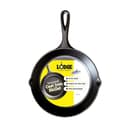
The default answer, and the one to buy if you want a small pan that can also do a little more than eggs. Eight inches is enough for two eggs and toast, a single chicken thigh, a personal cornbread, a handful of vegetables or a small skillet cookie, and it is still light enough to handle one-handed. It is sand-cast in Tennessee, pre-seasoned, cheap, and effectively unbreakable. The trade-offs are the ones every Classic Lodge has: a pebbled surface that takes a few months of cooking to slick up properly, straight sidewalls that fight your spatula a little on eggs, and a short handle that gets hot fast on a pan this size. None of that stops it being the right first small skillet for most people.
Lodge 6.5-inch — the best mini for one
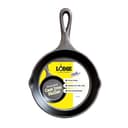
The smallest pan worth owning, and the cheapest cast iron Lodge makes. It is genuinely a one-serving pan — two eggs, one grilled cheese, a small batch of toasted nuts or spices, a single baked dessert — and its virtue is that it behaves like a normal frying pan rather than like cast iron. It is on the heat in a minute or two on a small burner, you can lift it with two fingers, and it takes up almost no cupboard space. Do not buy it as your only pan: it will frustrate you the moment you cook for two. Buy it as the second pan that lives at the front of the cupboard.
Lodge Chef Collection 8-inch — the best for eggs and omelets
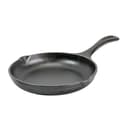
Lodge’s cooking-focused line, and the small pan we would choose if eggs are the main event. Two changes matter: the sidewalls are sloped and shallower, so a spatula slides underneath an omelet without catching, and the cooking surface is finished smoother than the Classic, so it releases well sooner in its life. The handle is also shaped rather than a plain stub. What you give up is capacity — shallower walls mean less room for anything saucy, and it is a poor choice for shallow-frying. For a couple of dollars more than the Classic 8-inch, if you know you are buying an egg pan, buy this one.
Victoria 8-inch — the best handle
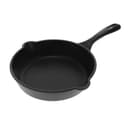
The most ergonomic small skillet here by a clear margin. Victoria casts a long, angled handle instead of the short stub that is standard at this size, which does two things: it keeps your hand further from the burner, and it gives you enough leverage to tip, swirl and pour with control rather than wrestling the pan. It is seasoned with flaxseed oil and ready to cook out of the box, and it costs about the same as the mainstream 8-inch pans. The two honest caveats: that long handle makes the pan a wider object to store than its 8 inches suggest, and it is cast in Colombia rather than the USA, which matters to some buyers and not to others. Read our full Victoria review if origin is part of your decision.
Field Company No. 6 — the best lightweight upgrade
The one premium pan in this group, and the only one where the money buys a genuinely different object. Field casts thin in the vintage tradition and machines the cooking surface smooth, so its 8.38-inch pan is both lighter than a comparable modern skillet and slicker from day one — the two things people actually want from a small everyday pan. It is beautiful, it is American-made, and it costs several times what a Lodge does for a pan that will not sear any better. Buy it if the weight and the finish are what have been keeping you from using cast iron; skip it if you just need a pan for eggs. Our Lodge vs Field comparison works through that trade-off in detail.
What size counts as “small”, and what fits in it
Cast iron is measured across the top rim, and the flat cooking floor is always smaller than that number — usually by an inch or so, because the walls flare. A 6.5-inch pan gives you roughly a five-inch floor: two eggs side by side, or one properly. An 8-inch gives you around six and a half inches: two eggs with room, one chicken thigh, a personal-size cornbread, a small batch of mushrooms. Neither will brown a pork chop and a pile of vegetables at once, and crowding a small pan is the fastest way to steam food instead of searing it. If you are trying to work out which sizes to own together, our cast iron skillet size guide lays out the whole range.
Do you need a small skillet if you already own a 10-inch?
Not need, no. But it is the cheapest addition that changes your habits. The argument is energy and inertia rather than cooking performance: a small pan preheats in a fraction of the time, sits on a small burner without wasting heat around the edges, and is light enough that reaching for it is not a decision. Cooks who own one usually report the same thing — the little pan quietly becomes the one they use most on weekday mornings, and the big skillet goes back to being a weekend pan.
The other case is weight. If you have ever put a cast iron pan back in the cupboard because your wrist did not want it, an 8-inch or 6.5-inch skillet is worth trying before you conclude that cast iron is not for you. The material is the same; the mass is not.
Caring for a small pan
Care is identical to any bare cast iron, with two small differences in your favor and one against. In your favor: a small pan dries out almost instantly on a warm burner, and it takes a fraction of the oil to wipe down. Against: the handle is closer to the flame, so it gets hotter faster than you expect — keep a mitt or a handle cover nearby, especially on a gas hob. Otherwise the routine is the usual one, and our cleaning guide covers it: hot water and a brush while the pan is still warm, dry it fully, wipe on the thinnest film of oil. If the surface is still sticky or food keeps grabbing, that is a seasoning problem, not a size problem.