How to choose a cast iron skillet
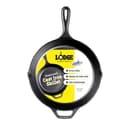
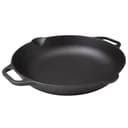
Start with size. A 10 to 10.25-inch skillet is the most useful single pan — big enough for two servings, cornbread or a small roast chicken, small enough to handle. Go to 12 inches only if you regularly cook for four or want to sear a big batch without crowding; an 8-inch pan is a great second skillet for eggs. Bigger pans are heavier and need a bigger burner to heat evenly. Our cast iron skillet size guide works through what each size actually holds, and the best small cast iron skillets cover the 8-inch-and-under end of the range. If what you want is bar marks and drained fat rather than an all-over crust, that is a different pan — see the best cast iron grill pans.
Weight is the deciding factor for most people
Cast iron is heavy, and a full 12-inch skillet flipped one-handed is a real workout. If weight is what’s stopping you, that’s exactly what the lightweight lines (Lodge Blacklock) and the boutique makers (Field, Stargazer, Smithey) are solving — thinner castings and smoother surfaces. If it isn’t a concern, a standard Lodge cooks every bit as well for a quarter of the price.
Smooth vs pebbled surface
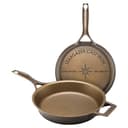
Old pans and modern boutique ones have a machined-smooth cooking surface; budget pans are left with the pebbled as-cast texture. Smooth releases food a little sooner, but a pebbled Lodge slicks up with a few weeks of cooking and ends up nearly as good. It’s a nice-to-have, not a need-to-have. Whatever you buy, our seasoning guide and cleaning guide are what keep it slick. If you would rather skip seasoning entirely, the best enameled cast iron skillets trade the bare surface for a glass one — no routine, safe with tomato and wine, at a higher price.
If you want to braise as well as sear, you want a lid
None of the pans above ships with a cover, and an open skillet cannot hold a simmer the way a lidded pan does. You have two ways to fix that: buy a deeper pan sold with a cast iron lid, or buy a lid that fits the skillet you already own, which costs far less. The best cast iron skillets with lids compares both routes, and explains the one published temperature — 400°F on a tempered glass cover — that quietly limits a pan with no oven ceiling of its own.
Iron that is not a pan
Some of the most useful cast iron in a kitchen never sees a burner. A cast iron tortilla press shapes dough that a comal then cooks, and it is the one category where documentation really sorts the field: Victoria publishes weights, an origin and a warranty, while one best-selling “cast iron” press says “Made of Cast Aluminum” in its own first bullet. The grill presses and the care accessories are the other two.
Two more objects belong here, and both are bought for the table rather than the burner. A cast iron kettle is almost never the kettle the name promises — nearly every one sold in the US is an enamel-lined teapot, and several sellers tell you in their own instructions to boil the water elsewhere and pour it in. A cast iron fajita pan is a small oval griddle whose whole job is to reach the table still spitting, and the decision there is not the iron at all: it is whether the wood underliner comes in the box, because Lodge sells the pan and the underliner as two separate part numbers.