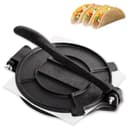
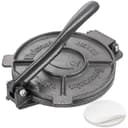
How to choose a cast iron tortilla press
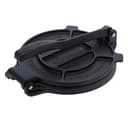
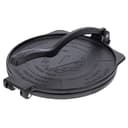
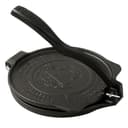
A press is a simple object — two flat plates, a hinge, a lever — which is exactly why the differences between them are easy to miss. These are the five that decide whether you like yours.
1. Is it actually cast iron?
Start here, because the category is full of aluminum presses sold under cast iron search terms. The tell is weight: the iron presses here publish between 5 and 16.4 pounds, and an 8-inch aluminum press typically lands near a quarter of that. IMUSA sells two 8-inch presses under almost the same name — one whose listing says cast aluminum in the bullet under a title that says cast iron, and a cheaper one openly described as a “Bare Aluminum Finish”. Neither is a bad object for the money; both are the wrong thing if you came here for iron.
Why it matters at all: a press works by mass and rigidity, not by heat. Nothing ever gets cooked in it. A heavier, stiffer press flattens a ball of masa with one unhurried pull on the lever, while a light one needs you to lean on it and still gives you an uneven round because the plates flex a little under load. Aluminum presses also react with acidic or alkaline dough — and masa is nixtamalized in an alkaline solution, which is the one chemistry aluminum likes least.
2. Plate diameter, which sets the ceiling on tortilla size
This is the spec to get right, because it is the only one technique cannot work around. A press makes a round no wider than its plates, and in practice a little narrower: the dough has to start as a ball in the middle, and the edge of the plate is where it stops. An 8-inch press is the category standard and the right size for corn tortillas, which is what most people press. A 10 or 12-inch press exists for flour tortillas, which want to be bigger and which fight back harder — VEVOR’s own listing puts it plainly: “Smaller-diameter presses work better for corn tortillas, while larger-diameter presses are suitable for flour tortillas.”
The honest limit on flour dough is worth stating before you spend $90 on a big press. Gluten is elastic; a pressed flour tortilla springs back toward its old shape in a way masa never does. Both Victoria and Uno Casa address this in their own copy by telling you to rest the dough first, and Victoria points wheat-tortilla buyers at its website for technique rather than claiming the press solves it. A 10-inch press gets you closer to a 10-inch flour tortilla than an 8-inch one does. It does not get you all the way.
3. Published weight, because the lever is doing physics
Weight is leverage in this category, and the published figures vary more than you would expect for such similar-looking objects. Where two sources publish different numbers for the same press, both are in the table below rather than averaged into something neither source said.
| Press | Plates | Published weight | Maker page? |
|---|
| Victoria traditional, 8 in | 8 in | 8.9 lb (Victoria) / 8 lb (Amazon) | Yes, with full specs |
| Victoria HD, 8 in | 8 in | 5 lb (Amazon only) | Listed, page did not resolve |
| Victoria HD, 10 in | 10 in | 9.3 lb (Victoria) / 10.5 lb (Amazon) | Yes, with full specs |
| Uno Casa press + comal set | 8 in press | 11 lb for both pieces | No |
| NSIRONS, 12 in | 12 in | 16.4 lb | No |
| Vivicreate | 7.5 in | Not published | No |
Figures as published by Victoria’s own product pages and by each Amazon listing’s spec table on October 22, 2026. Two of these numbers are strange and we are not going to pretend otherwise: Victoria’s HD 8-inch press is published at 5 lb, which would make the heavy-duty model nearly four pounds lighter than the traditional one at the same plate size, and Victoria does not explain it anywhere. Treat the HD’s weight as unconfirmed.
4. The hinge, the pins and the lever screw
If a tortilla press fails, it fails at the lever. That is why three of the six listings here — Victoria’s HD, NSIRONS and Victoria’s own 10-inch copy — make a point of including a spare screw for it, and why Victoria’s premium presses list “Stainless Steel Pins” as a material alongside the iron. It is also why the cheapest presses carry an odd sort of warning in their own copy: NSIRONS tells you not to worry about fracturing the press bar “if you carefully and slightly use”, which is not a sentence a confident maker writes.
Victoria is also the only brand making a metallurgical claim. Its large presses are sold as “HD Spherrous Iron”, described on its own page as “Spherrous Cast Iron” that “resists bending and breaking”. Victoria never defines the term and we are not going to define it for them: the honest summary is that the traditional press is explicitly “traditional gray cast iron”, the HD presses are explicitly something else that Victoria says is tougher, and the only published difference you can act on is that the HD frame is reinforced. Gray cast iron is brittle rather than malleable by nature, so a frame that resists bending is a real claim about a real failure mode — it is just one you have to take on Victoria’s word.
5. Does anybody document it?
We rank documentation as a criterion on this site, and in no category has it separated the field as sharply as this one. Victoria publishes product pages with dimensions, weights, the seasoning oil, the number of layers, a “Made 100% in Colombia” claim, care instructions and a lifetime warranty banner. Uno Casa, NSIRONS, Vivicreate and Alpha Living publish nothing we could reach, so every figure for them comes from the Amazon listing and the spec rows that are missing read “Not published” rather than carrying a guess.
That is not a reason to buy only Victoria. It is a reason to know what you are buying: the cheapest press here is a lump of iron that will probably work for years, with nobody on the other end if it does not. It is the same test we apply to brands rather than products — our Cuisinel cast iron review is a budget label that does publish care instructions and a warranty, and Amazon Basics publishes neither.
The presses, one by one
Victoria 8-inch traditional — the best overall
The default and the one to buy if you are reading this page once and getting on with your life. Eight-inch plates are the right size for corn tortillas, the published 8.9 pounds (Victoria’s own figure; Amazon says 8) is enough that the lever does the flattening, and it arrives seasoned in three layers of flaxseed oil so it works the day it lands. Victoria has cast iron in its own Colombian factories since 1939 — the brand behind the long-handled pans in our Victoria review— and this is the only press in the category with a maker page, a published origin and a warranty behind it.
Two honest caveats. Victoria’s own list price is $45.99, well above what the press usually sells for on Amazon, so judge it on the live price rather than the MSRP. And it is a corn-first press: if flour tortillas are the plan, the 10-inch is the one you want and the extra money is doing something real.
Uno Casa press + comal set — the best press-and-cook set
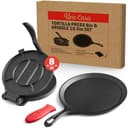
This is the pick that fixes the mistake almost every first-time buyer makes. A tortilla press does not cook anything. It is a shaping tool; the tortilla is then baked on a dry, hot, flat surface, and if you do not already own one you are two purchases away from dinner rather than one. Uno Casa sells the press with the 10.5-inch comal that does the cooking, which is the complete job and cheaper than buying the two separately.
The specs are the listing’s own: 11 pounds for both pieces, a removable silicone handle sleeve for the comal, 100 parchment sheets, and a comal rated “up to 450 F on gas, electric, grill or open flame”. That 450°F cap is lower than bare iron normally tolerates and we report it because Uno Casa published it. If you already own a flat pan, skip the set and buy a press on its own — and if the comal is the part you care about, our tawa and comal roundup ranks the flat pans properly, including the Victoria 10.5-inch that wins it.
Victoria 10-inch HD — the best for flour tortillas
The press for anyone whose tortillas are flour rather than corn, or who wants a round big enough to fold around a filling. Ten-inch plates are the largest size with real documentation behind them: Victoria’s page publishes a 10-inch diameter, 12.2 inches hinge-to-hinge, 9.3 pounds, stainless steel pins, three layers of flaxseed seasoning and the same Colombian origin as the traditional press.
It is also the most expensive press on this page by a wide margin — a $94.99 list price against $45.99 for the traditional 8-inch — and that is the honest reason it is ranked third rather than first. For most kitchens, two extra inches of plate is not worth double the money. For a household that presses flour tortillas every week, it is the only pick here that genuinely does that job.
Victoria 8-inch HD — the best for daily pressing
The in-between option: the standard 8-inch plate with the reinforced HD frame and the stainless pins. The case for it is wear rather than output — same tortilla, sturdier machine — which makes it the sensible pick if you press several times a week, or if you have already broken a cheap press and do not want to do it again.
Where we have to be careful: Victoria lists an 8-inch HD on its own site at $59.99 but that product page did not resolve for us on the visit date, so the only spec sheet available is the Amazon listing, and its published 5 pounds is both unverified and hard to square with the 8.9 pounds Victoria publishes for the traditional press at the same size. If weight is the thing you are buying, buy the documented one.
NSIRONS 12-inch — the best for burrito-size rounds
The largest press we could verify as live, and the answer to the 12-inch searches people run when an 8-inch round is too small to wrap anything. Its published 16.4 pounds is the most iron on this page, the handle folds so a 15-inch object stores flatter than it should, and there is a spare lever screw in the box.
It is ranked fifth rather than higher for two reasons, both of them about trust rather than performance. There is no maker page at all, so every number here is the listing’s own and nothing is independently confirmed. And the listing never says the press arrives seasoned — it tells you to rinse the plates in hot water, dry them thoroughly and oil them before storage, which is a season-it-yourself instruction. Our seasoning guide covers that in twenty minutes of oven time; just do not expect it to work out of the box.
Vivicreate — the best cheap press
The honest low-risk entry, and the pick we would give anyone who is not yet sure they will press tortillas more than twice. It is the cheapest press we verified live, it comes with 100 paper liners and four anti-slip feet, and the small footprint is a genuine advantage on a countertop.
Check the size before you buy, because this is the one place the listing quietly differs from the category: its own spec table says 7.5 inches, not 8. There is no published weight, no origin, no warranty and no maker page, and it never claims to be pre-seasoned. None of that stops it pressing a tortilla. All of it is why it costs what it costs.
What we left off, and why
IMUSA’s 8-inch presses.Both were in stock and both are cheaper than the iron. The one titled “Cast Iron Tortilla Press 8-Inch” says “Made of Cast Aluminum” in its own first bullet, and the other is openly sold with a “Bare Aluminum Finish”. Aluminum presses are a real product with a real following — lighter, cheaper, and the traditional choice in plenty of kitchens — but they are not what this page ranks, and a listing that contradicts itself in the first bullet is not one we are going to send you to without saying so.
Anything that is not a press. The other iron objects that never see a burner have their own pages: cast iron kettles and teapots, where the enamel lining rather than the metal is the whole decision, and cast iron fajita pans, where the question is whether the wood underliner comes in the box. Both are categories with the same documentation problem this one has.
Wooden presses. Nothing wrong with them either; they are simply a different material with a different failure mode, and a cast iron site is the wrong place to rank them.
Alpha Living’s 8-inch cast iron press.In stock and honestly described, but its listing publishes no weight, no dimensions and no care instructions at all — less than the similarly-priced Vivicreate, which at least publishes a plate size. Nothing is wrong with it; there was simply nothing to rank it on.
A press we could call made in the USA.The autocomplete suggests people look for one. We could not verify a single cast iron tortilla press manufactured in the United States as live and buyable on the visit date. Victoria’s presses are made in Colombia and shipped from the US, which is the closest thing in the category to a documented origin. If American manufacturing is what you are after in cast iron generally, our made-in-USA cast iron roundup covers the pans where it genuinely exists.
Using and caring for a cast iron press
A press lives a much easier life than a skillet, and its care instructions reflect that. Victoria’s own guidance for the traditional press is to wipe it with a damp cloth after use, never submerge it, avoid soap and abrasives, oil it lightly when it looks dry and store it somewhere dry. For the 10-inch HD, Victoria allows warm water and a dish brush when the press is genuinely dirty, as long as you rinse and dry it properly to prevent rust.
The practical reason the press stays so clean is that nothing cooks on it and, if you use it properly, nothing touches it either. Use two squares of parchment, plastic from a zip-top bag, or the liners that come in the box: dough goes between the sheets, the sheets touch the plates, and the press stays dry. That is also why seasoning matters less here than on a pan — you are protecting bare iron from humidity, not building a cooking surface. If yours does pick up a patch of rust in a damp kitchen, the fix is the same as for any pan: our rust removal guide takes it back to clean iron in an afternoon.
One thing a press is not: a pan. It never goes on the stove, it never goes in the oven, and the plates are not a cooking surface — which is why every press on this page has “Not published” where our spec tables usually say whether a pan is induction-safe. The tortilla goes from the press to a dry hot comal, a flat cast iron griddle or a plain cast iron skillet, cooked briefly on each side until it puffs.
So which one should you buy?
If you press corn tortillas: Victoria’s traditional 8-inch. If you press flour tortillas: Victoria’s 10-inch HD, knowing the dough will still spring back a little. If you do not own a flat pan yet: the Uno Casa set, because the press is only half the equipment. If you want to spend the least: the Vivicreate, at 7.5 inches. And if the word “iron” in a listing title is all you were going on — read the first bullet point before you buy anything in this category.