How we picked: five criteria, in this order
1. Does enamel earn its place in this class at all? This is the first question and it eliminated a whole category. Enamel earns its money where bare iron struggles: long wet cooking, acidic food, fridge storage, and anything holding water. It loses where bare iron is strongest: live fire, unlimited oven heat, and price.
2. A published oven ceiling.Enamel has exactly one failure mode and no food-safe home repair, so a maker that will not state a temperature is telling you something. Where no figure is published we say so and advise staying under 450°F rather than guessing.
3. The interior finish, light or dark. A light interior shows fond forming as you brown; a dark matte interior is built for searing and hides it. Neither is better, but it is the single biggest difference in how a piece feels to cook in, and it is worth deciding before you decide what to spend.
4. What else the maker will put in writing: a weight, a care rule, a country of manufacture, a warranty. In enamel the spread between brands on documentation is far wider than the spread on cooking.
5. Price last, because within enamel it predicts finish, provenance and recourse rather than results.
What enamel actually buys you
No seasoning, ever.A sound enameled surface is fired glass, so there is nothing to build and nothing to protect. Oiling one does not create seasoning — it goes streaky and then gummy — which our guide to seasoning enameled cast iron works through in detail.
Acid without consequences. A two-hour tomato braise will lift seasoning from a young bare pan. In enamel it is simply dinner. This single fact is why the pot is the piece to buy first.
Leftovers in the vessel. Lodge rates its enameled interiors as safe to store in the fridge and does not rate bare iron for it. On a weeknight that is worth more than most spec rows.
What enamel costs you
Heat headroom.Every enameled piece here publishes a ceiling, typically 500°F, and some listings publish none at all. Bare iron publishes none because it needs none. If you broil, or bake bread at 500°F-plus, that gap is real.
Fire.Lodge states plainly that its enameled line is “not made for use on a grill or over a fire”. If a campfire or a grill is part of the plan, the material decision is already made — camping pots are bare iron for this reason.
One failure mode, and it is permanent.Enamel does not wear out gradually, it chips on impact, and there is no food-safe home repair. Staub’s own guidance — the most specific in the category — is to discontinue use of the affected area and contact the company, and our chipped enamel guide covers what that means in a kitchen. It is also why the warranty is a bigger part of the price here than in bare iron.
Money. A bare 10.25-inch Lodge costs about what a cheap enameled kettle does. Nothing on this page is bad value, but the enamel premium is real and it buys convenience rather than performance.
Which pieces to own, honestly
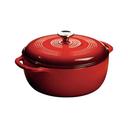
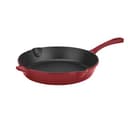
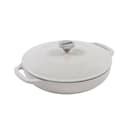
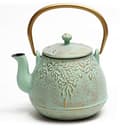
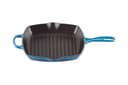
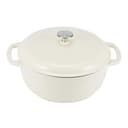
One, for most people: the pot. It covers every job where enamel is clearly better and nothing where it is clearly worse. Two, if you cook wide: add the braiser. Three, only if the seasoning routine is genuinely what has stopped you owning cast iron: add an enameled skillet — and if that is the piece you came for, our enameled skillet roundup is the page that ranks them. A kettle is a separate purchase driven by tea rather than cooking. The grill pan we would skip, for the reasons above.
For the bare iron version of this same exercise — which pieces of plain cast iron earn their cupboard space — see best cast iron cookware. For the pots at every price, best enameled Dutch ovens. And if your budget is the real constraint, Dutch ovens under $50 now includes enameled pots, which it would not have a year ago.
Care, in the makers’ own words
Hand wash is the common instruction, and the brands disagree about the dishwasher in a way worth knowing: Staub states its enamel is dishwasher safe and then recommends hand washing anyway, Le Creuset’s dealer sheet and grill pan both state dishwasher safe with hand washing recommended, and Lodge offers no dishwasher endorsement for either of its finishes. On utensils, Staub is the most specific: silicone or wood where possible, no knives inside the vessel, and specifically no striking metal against the rim, because impact rather than wear is what chips enamel. Staub also notes that dull, cloudy or rainbow-colored enamel is mineral or detergent residue and does not indicate damage, which saves a lot of people a needless return. Our guide to cleaning enameled cast iron reconciles the three positions.