How we picked: five criteria, in this order
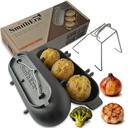
1. A verified live offer. On a shelf this thin it is the criterion that does the most work. We ran four separate retailer searches and kept only listings reporting a buyable in-stock offer on the day, which is why the rack-equipped 11-inch model is described above rather than ranked.
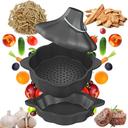
2. Does the listing’s own title support what we call it? Every pick here is titled a potato baker, a potato roaster, or a roaster explicitly sold as good for potatoes. Several other cast iron pots surface on these searches — plain combo cookers, a 1-quart camp pot, an aluminum potato stand, a pan rack — and calling any of them a potato baker because a search engine grouped them that way would be dishonest.
3. Published size, which almost nobody gives you. One pick states 5.3 inches. The rest publish nothing. For a pot whose purpose is holding a specific vegetable, that is the single most useful missing number, and it is why the best-specified pot is ranked second rather than fifth.
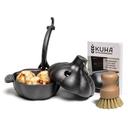
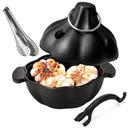
4. Vent, handle, or neither. The three features that genuinely differentiate these pots are a vented lid, a usable handle, and handles rated for a campfire tripod. Everything else is the same object.
5. Price last, because on this shelf price tracks branding more closely than it tracks anything you can measure.
Crisp skin or soft skin: the thing the lid decides
This is worth understanding before you buy, because it is the difference between two quite different potatoes and no listing explains it. A potato is mostly water. Put one in a sealed cast iron pot and the water it gives off has nowhere to go, so it sits as steam around the potato: the inside goes fluffy and the skin stays soft and slightly damp. Leave the lid off, or vent it, and that moisture escapes and the skin dries and crisps.
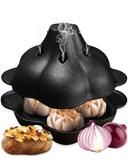
Neither is wrong — a steamed-then-crisped potato is a legitimate technique, and soft skin is what a lot of people want under butter. But it explains two things. First, why the one listing that mentions a vented steam release is worth noticing: it is the only pot here offering the choice without taking the lid off. Second, why a dedicated potato pot is a smaller upgrade over a baking sheet than it looks — an open oven already crisps a skin, and the pot’s contribution is heat retention and a more forgiving, more even cook.
What this shelf publishes, and what it does not
We think the documentation gap is the real story of this category, so here it is plainly. Across the five live listings: one publishes a dimension (5.3 inches). None publishes a capacity in quarts or in potatoes. None publishes a weight. None states a country of manufacture. None has a maker’s own website we could read, so there is no care page, no warranty document and no spec sheet behind any of them. Three state that the pan arrives pre-seasoned; two do not say either way, which is why we have recorded that field as unpublished rather than assumed it.
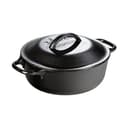
Compare that with the plain Lodge 2-quart, which publishes a part number, a weight, three dimensions, the seasoning oil, PFAS-free manufacture, a country of manufacture and every heat source it is rated for. That asymmetry is the argument for the last pick on this page, and it is why we ranked it rather than leaving it out to keep the list tidy.
Care: treat all of them as bare cast iron
Every pot here is bare iron, not enamel, so the routine is the same one the rest of this site uses: scrape rather than soak, hand wash, dry it fully — a warm burner for a minute is the reliable way — and wipe on a thin film of oil. Our seasoning guide covers building the surface and how to clean cast iron covers the day-to-day. Two notes specific to roasting vegetables in a lidded pot: a long session with a lid on leaves the interior wetter than frying does, so dry it more carefully than you would a skillet; and garlic and onions are mildly acidic, so a brand-new pan with a young seasoning will lose a little of it on the first few cooks. That is normal and it rebuilds.
Should you buy one at all?
Our honest answer is: only if one of the three real features matters to you. If you want to bake potatoes over a campfire, the tripod handles are worth paying for. If you want to roast whole garlic heads regularly, the small vented pot is genuinely the right tool and the cheapest way to the job. If you want a handle on a hot small pot, buy the one with a handle.
Otherwise, buy a plain small lidded pot. It costs the same or less, it publishes what it is, it is made in America, and it will bake potatoes, roast garlic, cook rice, hold a side of beans and take a camp fire. The shape has its own roundup, and best cast iron pots sets out all five cast iron pot shapes with one pick each if you are not sure which you want. If the budget is the binding constraint, Dutch ovens under $50 covers the band most of this page sits in.