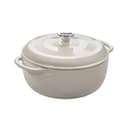
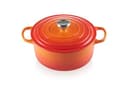
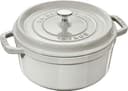
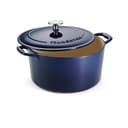
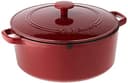
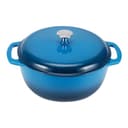
If you are shopping by maker rather than by pot — which is how most people start — the best Dutch oven brands takes one pot from each of the six brands here and ranks them on what the maker will actually put in writing: where the pot is made, what the enamel is rated to, what has been tested for lead and cadmium, and what the warranty covers.
How to choose an enameled dutch oven
Size first: a 5.5 to 6-quart round is the do-everything choice (see our size guide, or the large 7-quart-and-up pots if you cook for a crowd). Shape second,and the answer is round unless you roast long cuts often — round vs ovalcosts out the three pounds and thirty dollars an oval adds in Lodge’s own line. Interior color next: a light, sand-colored interior (Le Creuset, Lodge, Tramontina) makes it easy to judge browning and the fond at the bottom; a dark matte interior (Staub) is built for higher-heat searing but hides that visual cue. Then price:decide whether you’re buying a tool or an heirloom. If this is the first dutch oven you have owned, our beginner dutch oven picks narrow the field to the forgiving ones.
Do you need Le Creuset or Staub?
They are genuinely excellent — French-made, beautifully finished, lifetime-warrantied, and they hold resale value. But a $90 Lodge enameled pot braises the same dinner. Buy the French pots for the finish, the color range and the fact you’ll pass them down; don’t buy them expecting better food. Our Le Creuset and Staub reviews go deeper.
Looking after the enamel
Enamel needs no seasoning, but it isn’t indestructible: avoid banging metal utensils on the rim, don’t drop it, and let it cool before plunging it into water (thermal shock can crack enamel). Hand washing keeps a light interior looking its best; staining is cosmetic and doesn’t affect cooking.
And if the pot you already own has taken a knock, read chipped enamel on cast iron before you replace it. A chip on the outside wall is cosmetic, a chip on the rim is manageable, and a chip on the cooking surface is the one case where the makers tell you to stop — and both French brands may cover it.
Buying one specifically for soup
If soup and stew are the reason you are here, the ranking changes a little: cooking-floor width and capacity per eater matter more than prestige, and Lodge publishes the figures to compare — a 10.5-inch cooking surface and a 6.87-inch flat bottom on its 6-quart. Our best Dutch ovens for soup and stew ranks the same pots on those criteria, and explains why enamel is the right surface for a three-hour tomato simmer where bare iron is not.