How we chose these beginner dutch ovens
1. Enamel, unless you have a reason not to
This is the single most useful piece of advice for a first pot. Enameled cast iron is the same heavy iron underneath, with a fused glass coating on top: no seasoning to build, no rust to worry about, and complete freedom with tomato, wine, citrus and vinegar — which is most of what people cook in a dutch oven. Bare cast iron is cheaper and tougher, but it asks you to learn seasoning at the same time as you learn braising. Our enameled vs bare comparison lays out the full trade-off.
2. Five to six quarts
Big enough for a chicken, a braise for four, a big pot of soup or a sourdough loaf; small enough that you can still lift it out of the oven when it is full. Beginners over-buy here more than anywhere else, usually reasoning that a 7 or 8-quart is more versatile. In practice a large pot spreads a small braise too thin, takes longer to come up to heat, and gets left in the cupboard because it is heavy. Our size guide goes through the whole range.
3. Handles you can hold with oven mitts
An unglamorous detail that decides how safe the pot feels. A full 6-quart dutch oven coming out of a hot oven is heavy, and if the side handles are small loops your mitted fingers cannot get into, you will be moving it awkwardly every single time. Wide, generous side handles are worth more to a beginner than almost any other design feature.
4. A lid that seals, and a knob that takes the heat
A dutch oven works by trapping steam, so a heavy, well-fitting lid is most of the point. Check the lid knob’s temperature rating too: some pots ship with a phenolic (plastic) knob rated lower than the pot itself, which quietly caps how hot you can run it. A metal knob, or a cheap stainless replacement, removes that ceiling.
5. Cheap enough to be used badly
You will scorch something, scrape the base, and leave the pot soaking once. Every one of the picks here is priced so that none of that is a disaster. The heirloom French pots are wonderful, and we review them honestly elsewhere, but starting with one tends to make people careful in a way that stops them cooking.
The beginner dutch ovens, one by one
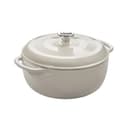
Lodge Enameled 6-quart — the best overall first pot
The pot we would put in most first kitchens. It is a 6-quart enameled dutch oven from the biggest name in American cast iron, at a price that sits well below the French houses, with the two things a beginner benefits from most: an enamel interior that needs no seasoning and shrugs off acidic food, and wide loop handles you can actually grip with mitts. It braises, bakes bread, deep-fries, makes soup, and goes from the hob to the oven to the table. The honest caveats are that the enamel finish is not as flawless as a Le Creuset — you are paying a third as much — and that the light interior stains over time, which is cosmetic rather than a fault.
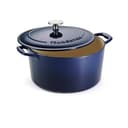
Tramontina Enameled 6.5-quart — the best value
The pot recommended as the Le Creuset alternative more often than any other, and the value pick if you want the most cooking pot per dollar. It is a hair larger than the Lodge at 6.5 quarts, well-finished for the money, and it does everything the expensive pots do because the physics of a heavy enameled iron pot does not change with the badge. What you give up is the resale value, the color range and the lifetime-warranty aura of the French names, plus a little heft-and-fit refinement. Our Tramontina review and Lodge vs Tramontina comparison go deeper if you are choosing between these two.
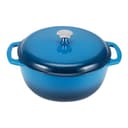
Amazon Basics Enameled 6-quart — the cheapest way in
The pot to buy if you are genuinely not sure whether you will use a dutch oven. It is the least expensive enameled 6-quart worth recommending, and it does the fundamental job: heavy iron, a glass interior, a lid that holds steam. It is not built to the standard of the others — expect a rougher enamel finish and less confidence about long-term chipping — and there is no meaningful heritage or warranty behind it. But a cheap pot you cook in every week beats an expensive pot you are frightened of, and if you love it, you will know exactly what to buy next.
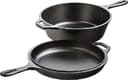
Lodge Combo Cooker — the best for bread on a budget
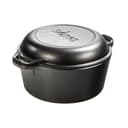
The outlier here, and the smartest cheap purchase in cast iron. It is a 3.2-quart bare cast iron pot whose “lid” is a full 10.25-inch skillet, so you get two useful pieces for one low price — and inverted, the shallow skillet becomes the base you load a sourdough loaf onto, which is far easier and safer than dropping dough into a deep, screaming-hot pot. For a beginner whose main interest is bread, this is the pot to start with. It is bare iron, so it needs seasoning care and is not the pot for a long tomato braise, and 3.2 quarts is too small to be a general-purpose dutch oven. Our sourdough roundup covers the bread case in full.
Lodge Double Dutch Oven 5-quart — the best bare iron starter
If you have decided on bare cast iron — because it is cheaper, tougher, and you like the idea of maintaining a seasoning — this is the sensible first pot. Five quarts is the right beginner size, the lid doubles as a shallow skillet, and it is American-made and pre-seasoned. Be clear about what you are taking on: you will dry it properly every time, keep long acidic braises out of it, and occasionally rebuild the finish using our seasoning guide. Done willingly, that is a pleasant ritual; done resentfully, it is the reason the pot ends up in a cupboard.
What we would not start with
Not because they are bad — because they are the wrong first purchase.
- A 7 or 8-quart pot. Too heavy full, too big for everyday cooking, and it makes small braises watery. Buy the large size later, when you know you need it.
- A Le Creuset or Staub as a first pot. They are excellent and we review them fairly, but spending several hundred dollars before you know how you cook tends to produce a pot people treat as an object. Our Lodge vs Le Creuset comparison covers what the extra money does and does not buy.
- An oval pot. Ovals look elegant and suit a long roast, but they sit badly over a round burner and are a poor match for a round loaf. Start round.
- A camp dutch oven, for kitchen use. The legs and flanged lid make it superb over coals and awkward on a stove. If that is what you want, buy it deliberately from our camp dutch oven roundup.
Your first month with a dutch oven
Cook three things in the first month and you will understand the pot completely. Start with a chili or a pot roast: brown the meat hard in the pot on the hob, then let it braise low and covered, and notice how the heavy walls hold a steady simmer with no hot spot. Then make a no-knead loaf, which shows you what the sealed lid does — the trapped steam is what gives a home oven a bakery crust. Then use it as an ordinary soup pot on a weeknight, which is the test of whether you bought the right size.
Two habits to build early: preheat gradually rather than blasting an empty pot on high, and never move a hot pot straight into cold water. Both are about thermal shock, which is the one way an enameled pot genuinely gets damaged. Our first use and care guide covers the whole routine, and cleaning enameled cast iron covers getting stains and stuck-on fond off the enamel without scratching it.