How we picked: the permission question first
1. Is it rated for live fire by the maker?Not “will it survive”, but what the manufacturer puts in writing. Bare cast iron: yes, explicitly, from Lodge. Enameled cast iron: no, explicitly, from Lodge. Grill hardware with a porcelain coating designed for a firebox: yes, from Weber. That single test removed more candidates than anything else.
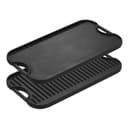
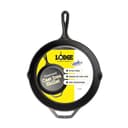
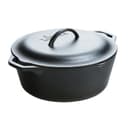
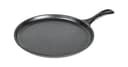
2. Does it sit on a grate safely? Grate bars are spaced for steaks, not for round pans. A piece either spans the bars (the 20-inch griddle), drops into a designed hole (the sear grate), or has a flat base broad enough not to tip (the skillets, the griddle, the pot). A small round pan balanced on two bars over live coals is how people lose dinner.
3. Does it solve a problem a bare grate cannot? Food that falls through, food that needs fat around it, liquid, or contact. If a bare grate already does the job, buying iron to put on top of it is a downgrade: you give up smoke contact and grill marks for no return.
4. Price last, and deliberately low. Anything that lives on a grill gets soot, scrapes and thermal abuse. This is the one page on the site where we would steer almost everyone away from an expensive pan, and the machined, polished pans that cost six times as much buy you nothing at all over a fire.
What a grill does to cast iron, honestly
The outside will never look the same.Flame and smoke build an uneven, flaking carbon layer on the outer wall and base — not seasoning, just soot and polymerised drippings. It is harmless, it will transfer to your hands and your worktop, and it is the main reason to own a dedicated outdoor piece rather than carrying your kitchen skillet out to the patio.
The heat is far higher and far less even than a hob.A charcoal bed under a cast iron plate runs well past anything a domestic burner reaches, and it is hot in patches. That is fine for iron — Lodge publishes no ceiling for bare cast iron, and the metal’s melting point is irrelevant at grill temperatures — but it will strip a young seasoning in places and carbonise any oil you leave on the surface. Expect to re-season an outdoor piece more often than an indoor one; how to reseason cast iron is the five-minute version.
The handle is a serious burn risk, not a warm one. A cast iron handle sitting inside a closed grill reaches the temperature of the grill. Use a glove every time, and never a damp cloth: steam burns through a towel instantly.
Three mistakes that are specific to cooking iron on a grill
Putting an enameled pot on the grate. We have said it twice because it is the expensive mistake. Lodge, Staub and Le Creuset all publish limits that a grill exceeds, and a chipped enamel interior is permanent. If you want a grill-and-fire pot, buy a bare one.
Preheating the iron off the grill. A cold plate on a hot grate steals heat from the fire and then cooks unevenly for ten minutes. Put the iron on while the grill comes up to temperature, with the lid down, and let it rise with the grill.
Covering the whole grate. A 20-inch griddle on a standard kettle blocks airflow through the charcoal and smothers the fire. Leave at least a third of the grate clear for air, and you also get a bare-grate zone to move food to.
If a campfire rather than a grill is the plan
Camp cooking has different hardware: legs that stand a pot over coals, a flanged lid that holds coals on top, a bail handle for a tripod. Lodge says its camp ovens are “not for indoor use”, which is the mirror image of the rule on this page. Best camping Dutch ovens and best cast iron skillets for camping rank those, and gifts for campers and grillers is the version of this list for buying someone else a present.