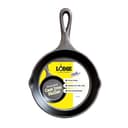
Published weights, side by side
These are the makers’ own numbers, taken from their product pages on the date at the foot of this page. Amazon’s spec tables sometimes disagree; where they do, the cards say so.
| Skillet | Rim size | Published weight | How it got light |
|---|
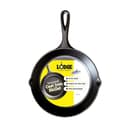
| Lodge 6.5-inch classic | 6.5 in | 1.94 lb | Small |
| Field No. 6 | 8.38 in (7 in cooking area) | 3 lb | Thin casting, small |
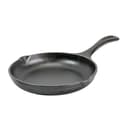
| Lodge Chef Collection 8-inch | 8 in | 3.17 lb | Small, shallow walls |
| Lodge 8-inch classic | 8 in | 3.44 lb | Small |
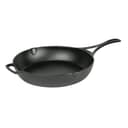
| Lodge Blacklock 10.25-inch | 10.25 in | 4.61 lb | Thin casting |
| Lodge 10.25-inch classic (for reference) | 10.25 in | 5.66 lb | — |
| Lodge Blacklock 12-inch | 12 in | 6.14 lb | Thin casting |
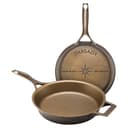
| Stargazer 12-inch | 12 in (9.4 in cooking surface) | 6.5 lb | Lighter casting, machined |
| Lodge 12-inch classic (for reference) | 12 in | 7.69 lb | — |
How we chose these lightweight skillets
1. Weight for the size, not weight alone
A 6.5-inch pan is light because it is tiny. What most people mean by a lightweight skillet is a full-size pan that weighs less than it should, so the ranking leads with the Blacklock: a real 10.25-inch pan at 4.61 lb, more than a pound under the classic Lodge of the same size by Lodge’s own figures. Field’s 3 lb No. 6 and Stargazer’s 6.5 lb 12-inch are the same idea at the small and large ends. The small classic Lodges follow because they are the cheapest route to a pan you can flip one-handed, even though they are no thinner than their big siblings.
2. What thin walls cost you
Cast iron stores heat in its mass. Take mass away and the pan cools more when cold food hits it, which matters most for a hard sear and barely at all for eggs, pancakes, vegetables or a grilled cheese. Lodge says it plainly in its own description of the Blacklock as a thin, lightweight design, and our registry card for the pan carries the honest con: thinner walls hold slightly less heat for a long, hard sear. For the sear itself, the heavier pans in our steak roundup are the better tool. For everything else, the lighter pan is the one you will actually use.
3. Handle design
Perceived weight is as much about balance as pounds. Lodge gives the Blacklock an extended, raised handle that it says stays cooler longer; Stargazer’s long handle is designed to run cooler and balances a 12-inch pan better than a stub; Field shapes a longer profile to balance the pan in the hand. The short handle on the small classic Lodges is the one ergonomic strike against them, and on a 6.5-inch pan that handle sits close to the burner and heats up fast.
4. Finish, and whether you pay for it
Field and Stargazer machine their cooking surfaces smooth; Lodge triple-seasons the Blacklock for a smoother start; the classic Lodges are pebbled and slick up with use. Smoothness is a genuine pleasure and a real help with eggs, and it roughly doubles or triples the price. If weight is the only complaint, the Blacklock solves it for far less than the boutique pans.
Two lightweight pans we could not rank
Lancaster’s No. 8 publishes 4 lb for a 10.5-inch, machined-smooth pan, which would sit near the top of this list; it is sold direct and not on Amazon, so it appears in our Lancaster review rather than here. Le Creuset describes its enameled skillet as the lightest weight cast iron by quart on the market — the maker’s claim, not our measurement — at 6 lb 14 oz for an 11.75-inch pan, and it lives in the enameled skillet roundup because it is a different kind of pan with a 500°F ceiling.
Or just buy smaller
If the heavy pan you own is a 12-inch, the honest advice may be to keep it for the times it earns its weight and add a small pan for the daily jobs. The 8-inch Chef Collection at 3.17 lb is our budget pick for exactly that reason: sloped walls that let a spatula slide under an egg, a smoother finish than the classic, and a price that makes it an addition rather than a replacement. Our small skillet roundup and size guide work through what each size really feeds.