How we chose a chicken pan
1. Height above the oil, not diameter
This is the criterion that reorders the whole category. Chicken wants roughly an inch to an inch and a half of fat, and that fat climbs when cold, wet, battered meat goes in and water flashes to steam. You want at least double the depth of oil in pan height, and more if you fry in batches.
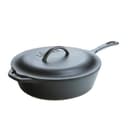
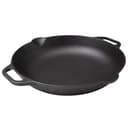
Lodge publishes the figures that let you check. The 12-inch covered deep skillet (part L10CF3) is 5.96 inches high; the 10.25-inch version (part L8CF3) is 5.62. Compare that with the uncovered 10.25-inch deep skillet at 3.06 inches — Lodge publishes both — and with a classic skillet, which is shallower again. Nearly six inches of wall is what makes the covered 12-inch the safe choice rather than the fancy one.
2. Cooking floor, because crowding is what makes soggy chicken
Oil temperature collapses when too much cold food goes in at once, and a collapsed temperature is the entire explanation for greasy, pale fried chicken. The fix is floor area: more inches of bottom means more pieces per batch at the same temperature, and fewer batches means the oil spends less total time over 300°F degrading.
Lodge publishes 12.13 inches of width for the 12-inch covered deep skillet against 10.43 for the 10.25-inch, which is roughly a third more area for the same shape of pan. Our skillet size guide explains why rim diameter and cooking floor are not the same number, and the large skillet roundup covers the open pans at the top of that range.
3. A lid, and specifically an iron one
Two reasons. The first is splatter: a lid on for the first few minutes of each batch keeps most of the mess in the pan, and a cast iron lid will take any temperature the pan will. The second is the classic cover-then-uncover method — lid on to cook the meat through, lid off to crisp — which needs a lid that can sit on a pan full of 350°F oil without complaint.
Lodge’s covered deep skillets ship with a cast iron lid and Lodge states the whole heat-source list for them: any stovetop including induction, the oven, the grill or a campfire. Be careful substituting a glass lid here: Lodge publishes a 400°F oven ceiling for its tempered glass lids, which is the only published temperature limit on any Lodge lid and is below where fry oil sits in the pan. Our lidded skillet roundup covers that difference properly.
4. The weight you have to live with
A chicken pan is the heaviest cast iron most people own, because it is deep iron plus an iron lid plus two or three pounds of oil. Lodge publishes 14.49 lb for the 12-inch covered deep skillet and 10.25 lb for the 10.25-inch, and — usefully — publishes the uncovered versions too, at 9.28 lb and 6.39 lb, so you can see that the lid alone is roughly five pounds on the big pan and four on the small one.
Take that seriously before you buy the biggest one. Fourteen and a half pounds of pan plus hot oil is not something to carry across a kitchen; it is a pan you fry in on the burner and strain the oil out of in place. If that sounds like too much, the 10.25-inch covered version is the sane answer for two or three people.
The picks in context
Lodge 12-inch / 5-quart Covered Deep Skillet — the best overall
The pan Lodge writes its own fried chicken recipe for, in the size that recipe names. Five quarts and a 12-inch footprint gives you enough depth to shallow-fry safely and enough floor to brown a full batch; the cast iron lid is included; it is made in the USA, seasoned with 100% natural vegetable oil, made without PFAS, and rated by Lodge for any stovetop including induction plus the oven, grill or campfire, under its Made Right warranty.
The costs are physical. Lodge publishes 14.49 lb with the lid and 18.26 inches of overall length, which will not turn freely in a compact or apartment oven. Amazon titles the pan “5 Quart” and publishes no diameter at all, so the 12-inch figure comes from Lodge’s own page for part L10CF3 rather than the listing.
Lodge 10.25-inch / 3.2-quart Covered Deep Skillet — the best for two or three
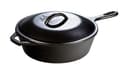
The same idea at a size one person can manage. Lodge publishes 5.62 inches of height — still nearly double the 3.06 inches of its uncovered equivalent — 10.43 inches of width and 10.25 lb with the lid. It fries four to six pieces at a time, sears then braises with the lid on, and costs meaningfully less than the 12-inch.
It genuinely is a smaller pan, and frying in more batches means more time at temperature for your oil. Amazon’s listing calls it “3 Quart” where Lodge publishes 3.2 quarts for part L8CF3, and neither states a cooking-surface diameter. There are also no pour spouts and one long handle, so draining fat needs a mitt and patience.
Lodge 12-inch Classic — the best open skillet
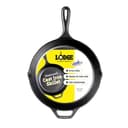
For half-inch shallow frying rather than true pan frying, a plain 12-inch skillet is a perfectly good chicken pan and a far better everything-else pan. Lodge publishes 7.69 lb for it, US manufacture, pre-seasoning with vegetable oil, no PFAS, and the full heat-source list. If you want one pan that fries chicken a few times a year and sears steak every week, this is it.
Do not try to run an inch and a half of oil in it. A classic skillet is shallow, it has no lid, and a boil-over on a gas burner is a real hazard rather than a theoretical one. Our steak roundup is the better page if searing is the main job.
Lodge 7-quart Dutch Oven — the best for deep frying
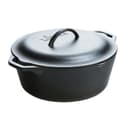
If you want the chicken fully submerged rather than turned halfway, use a pot. Seven quarts of bare cast iron with a heavy iron lid holds enough oil to cover a thigh, has tall walls that contain the inevitable foam, and is American-made at a price no enameled pot of that size approaches. Hot fat also actively improves seasoning rather than stripping it, which makes a bare pot the right surface for this one job.
It is very heavy, especially with four inches of oil in it, and the bare interior wants care with long acidic cooks between frying sessions. Our deep-frying pot roundup ranks the whole category on depth and capacity, and pot against skillet settles the choice.
Victoria 13-inch — the best wide floor
The cheapest way to get a genuinely large cooking floor, with the most comfortable handle in the budget tier. Victoria casts in Colombia, pre-seasons with flaxseed oil, and gives the pan a longer, angled handle that balances better than a short Lodge grip when the pan is full and heavy. Thirteen inches of floor fries a big batch in one go.
The as-cast surface is textured like most budget pans, and the long handle means it does not fit a small oven neatly. It is also an open pan, so the depth caveat above applies in full. See the Victoria review for the longer picture.
Lodge 10.25-inch Classic — the best budget
Here because it is the pan most people already own, and because a quarter-inch of oil in a 10.25-inch Lodge will fry chicken cutlets, tenders and wings perfectly well. Lodge publishes 5.66 lb for it, US manufacture and the full heat-source list, and it costs less than the oil you will fry in.
It is the wrong pan for bone-in pieces in deep fat: too shallow, no lid, and only enough floor for three or four pieces before the oil temperature drops. Treat it as the pan you start with, not the pan you buy for this.
Frying technique the pan cannot fix
Use a thermometer, and work at 350°F.That is the figure in Lodge’s own recipe, with the chicken taken to an internal 165°F. Cast iron’s advantage in frying is thermal mass — the oil temperature drops less when food goes in — but mass also means the pan is slow to correct, so set the temperature before the first piece and adjust the burner in small steps.
Fry in batches with gaps.Every piece you add past a single uncrowded layer costs you temperature, and temperature is crust. This is the whole argument for the wider pan: Lodge’s 12.13 inches against 10.43 is one extra piece per batch and one fewer batch overall.
Let the pan cool before you clean it, and keep water out of hot fat.Lodge’s care instruction for bare iron is wash, dry and rub with oil, and frying leaves a pan in excellent condition for it — a chicken fry is effectively a seasoning session. Strain and keep the oil if it still smells clean. Our cleaning guide covers the rest, and why cast iron smokes explains the burnt-oil smell that means you took the fat past its limit.